

Intro
For several years, I advised and worked with the Robert F. Kennedy Human Rights center which back then was a different kind of organization (under Todd Howland and later Monika Kalra Varma). At the time, they offered a variety of services to their human rights award winners (e.g., getting political and legal advice about how to move people/organizations in Washington, D.C. to move in their desired direction). I also got them to include me along with the package. Essentially, I would meet with the awardees, find out what they wanted to do (i.e., what they wanted to change) and them help them do it with the help of friends and associates. It was basically win-win: the activists got some much needed assistance with what they were trying to do and the helpers got to help individuals/groups in the real world as well as occasionally get some phenomenal research projects out of it.
On one of these occasions, I was introduced to the 2000 awardee: Martin Macwan. By any measure, Martin was an incredible human being, activist, scholar and lawyer. When we met, however, he was a bit skeptical. Up until the time that I met him, he felt that the organization had not done much for him but he was still hopeful. His interest was with trying to understanding what (if anything) his organization was doing effectively to reduce untouchability (i.e., caste discrimination). After numerous conversations we realized that what was needed was a baseline against which we could identify the impact of subsequent activities. With this in mind, I traveled to where his organization was - Navsarjan Trust. Thus began our interaction.
On one of these occasions, I was introduced to the 2000 awardee: Martin Macwan. By any measure, Martin was an incredible human being, activist, scholar and lawyer. When we met, however, he was a bit skeptical. Up until the time that I met him, he felt that the organization had not done much for him but he was still hopeful. His interest was with trying to understanding what (if anything) his organization was doing effectively to reduce untouchability (i.e., caste discrimination). After numerous conversations we realized that what was needed was a baseline against which we could identify the impact of subsequent activities. With this in mind, I traveled to where his organization was - Navsarjan Trust. Thus began our interaction.
Initial Encounters
Initially, I went to India alone to interact with Navsarjan Trust but very quickly included my friend and colleague Prof. Allan Stam who I worked with on Rwanda. Our initial interactions were mostly informational. As untouchability goes back several thousand years, we had much to be informed about. Accordingly, we read a great deal (both mainstream and some notable anti-Hindu books), we talked to different scholars that focused on different aspects of untouchability and we traveled around to different villages so that we could see the discriminatory practices for themselves. Interestingly, the upper caste did not seem to have any problem publicly shaming, threatening or chastising Dalits for violating some rule (in english!). I was told to hold my tongue and I just wrote everything down for later.
Maps of Different Villages
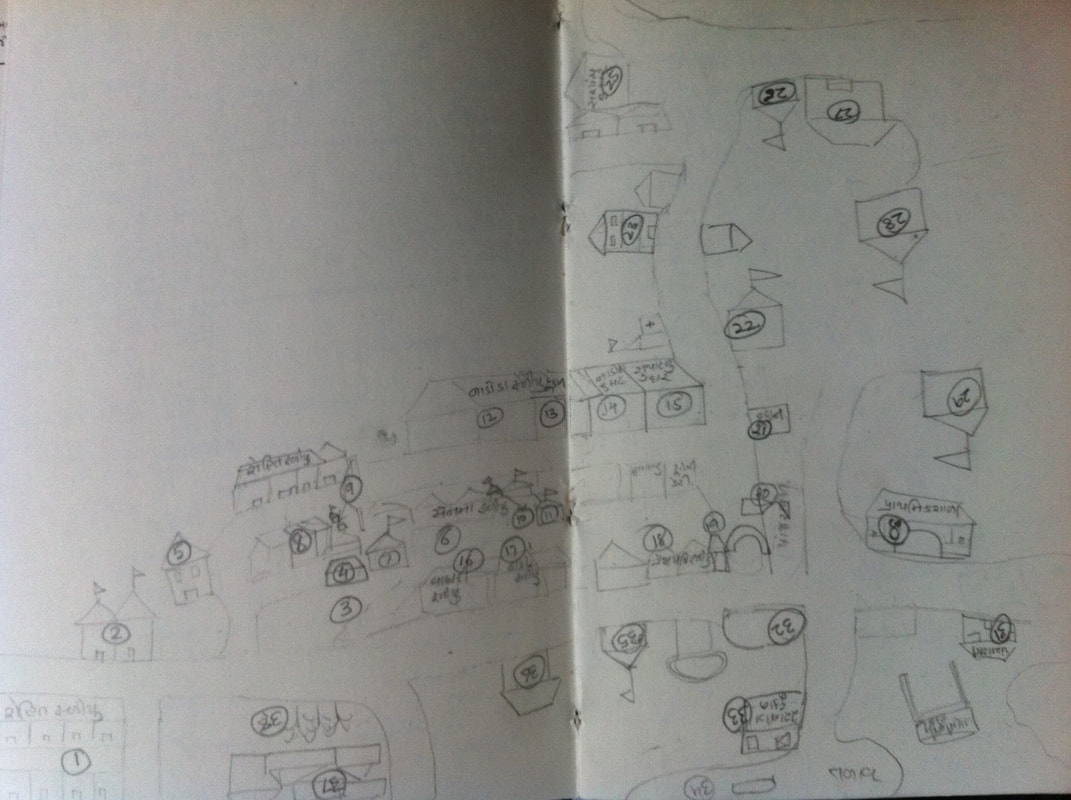
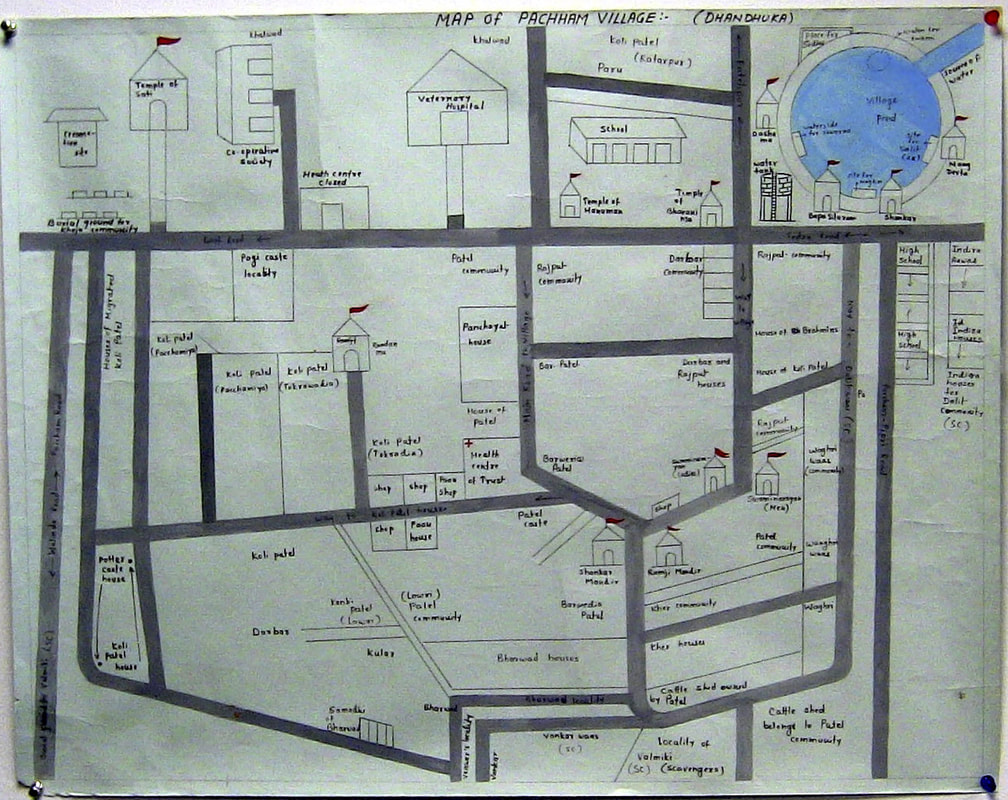
As we began to prepare our research effort we thought it would be useful for all of the villages where Navsarjan worked to be mapped in a way that we could reference what was being done where and whom by geo-locating all activity. Accordingly, Martin trained the Navsarjan workers on what was needed and they were sent out to the thousands of locales where they were working. Samples are provided below.
Untouchability Index
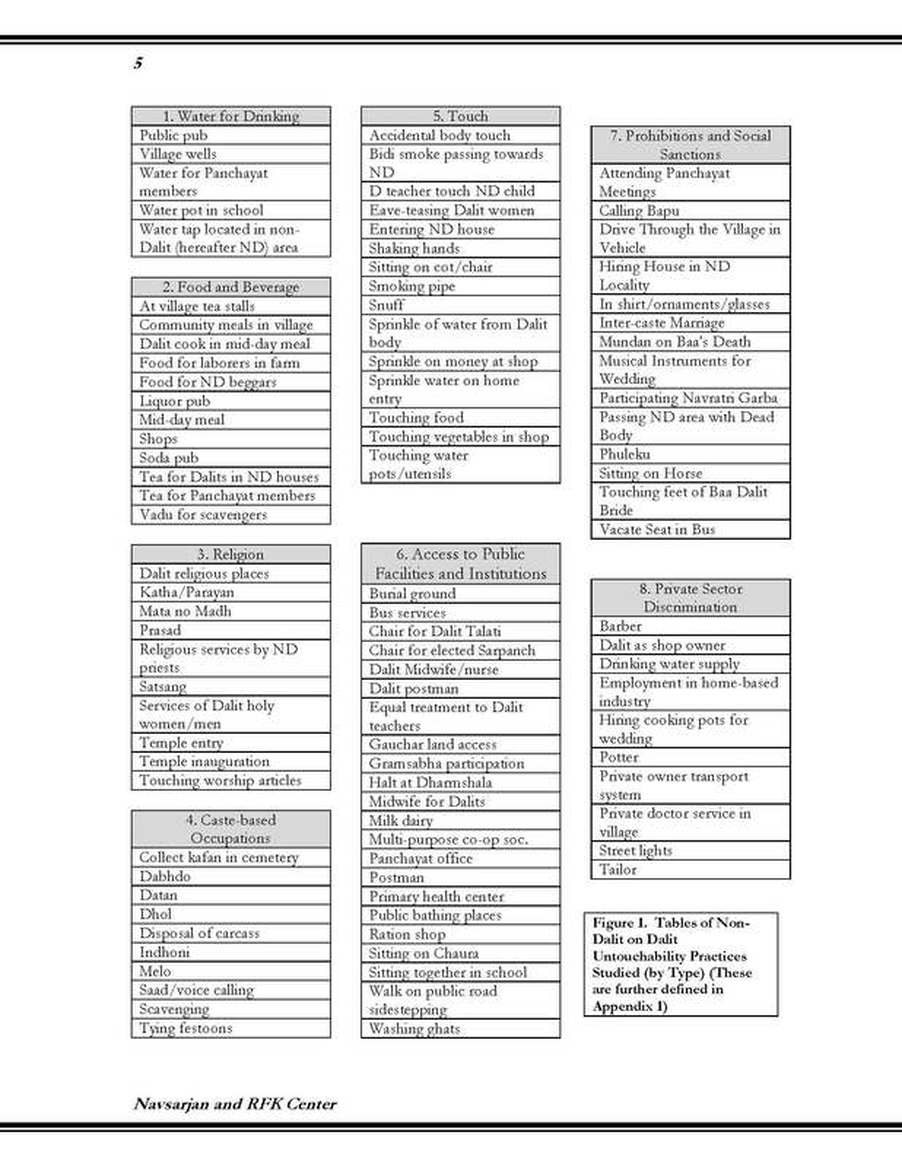
After about a year and a half's worth of conversation, reading, detailed commentary about research design as well as some training, a few focus groups, a pilot study, and some more training, we finally set out to measure untouchability. Ninety nine forms were identified by the research team through archival research, interviews and focus groups (pg 40-50 in the report below define each of them).

| untouchability_report_final_complete_1.pdf |
- Here is some documentation about where the 99 forms are mentioned historically
- Here is the form used for coding (pending access to different computer)
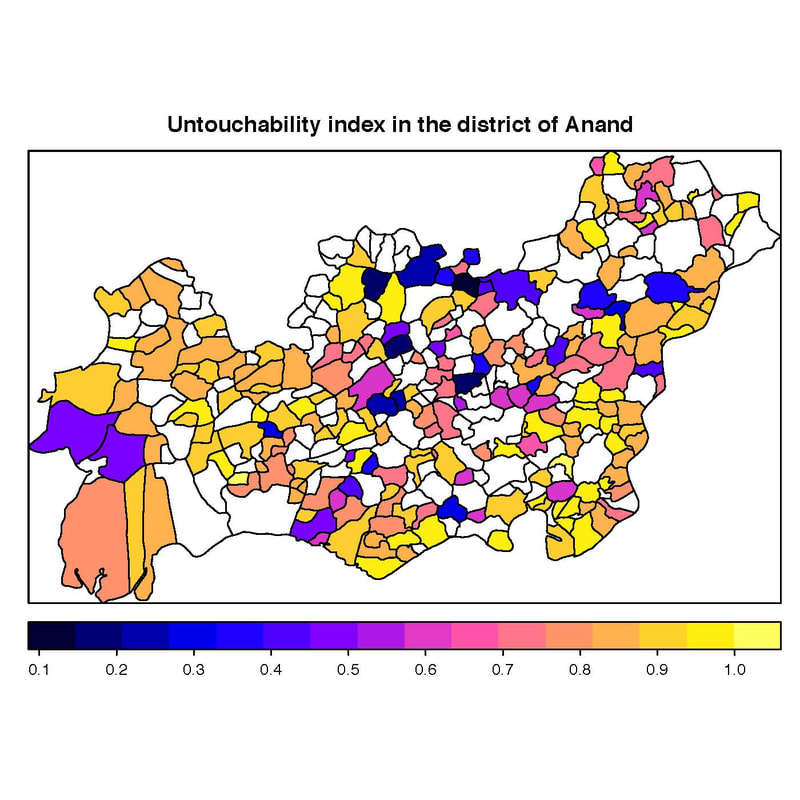
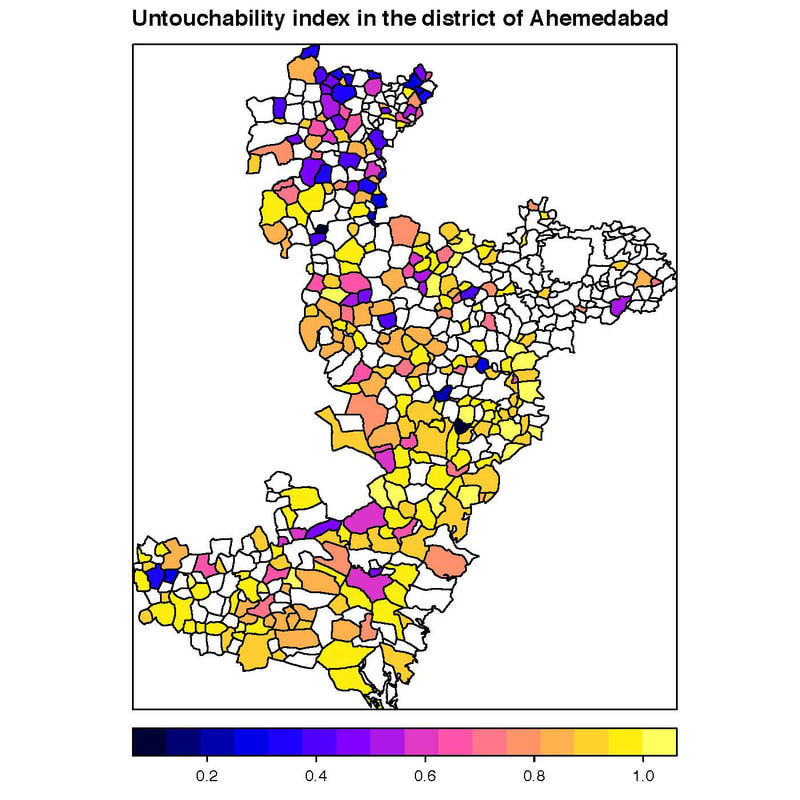
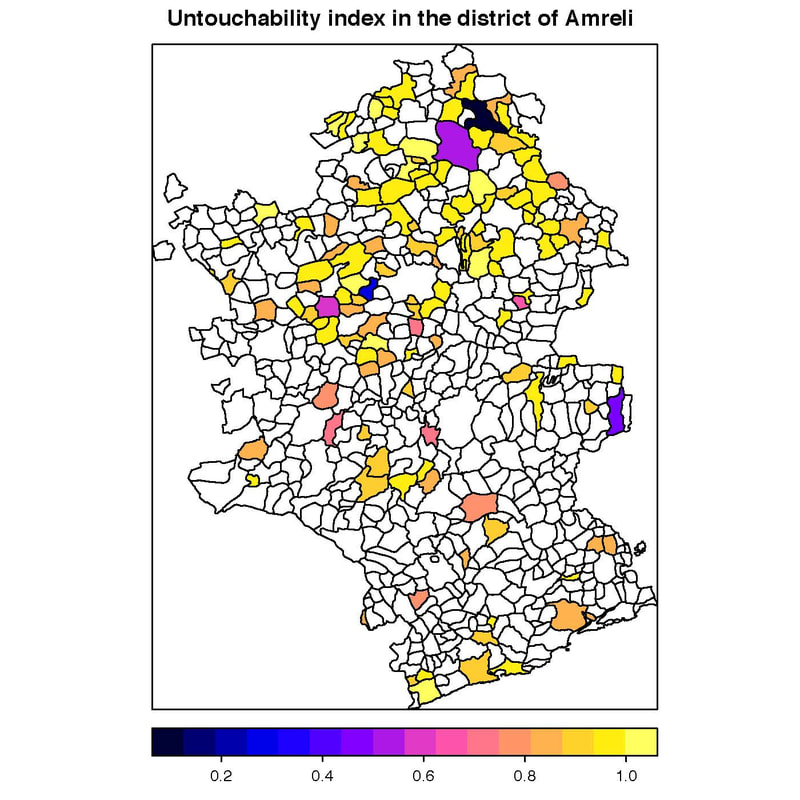
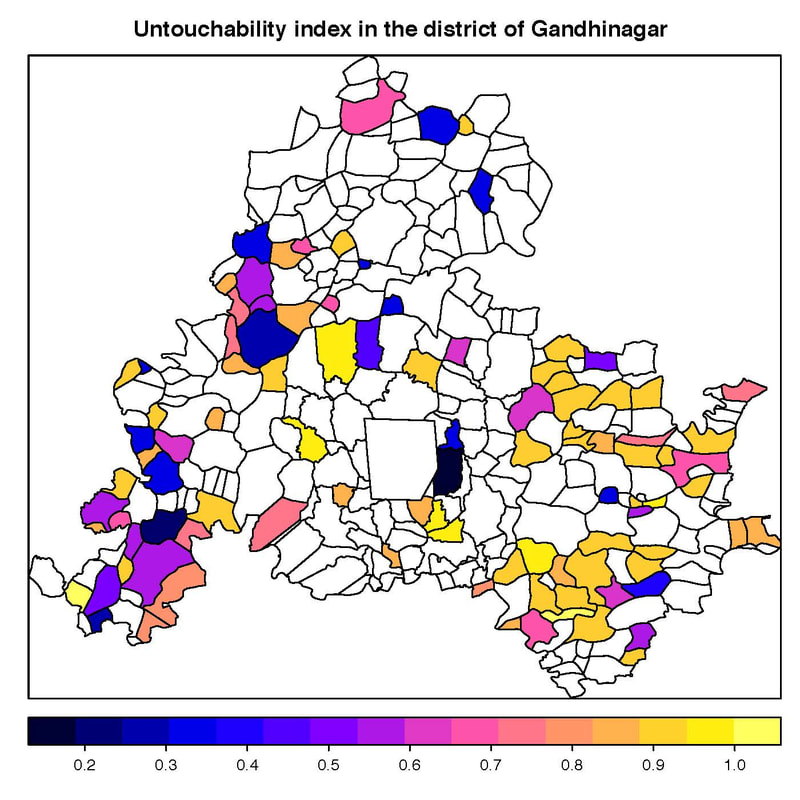
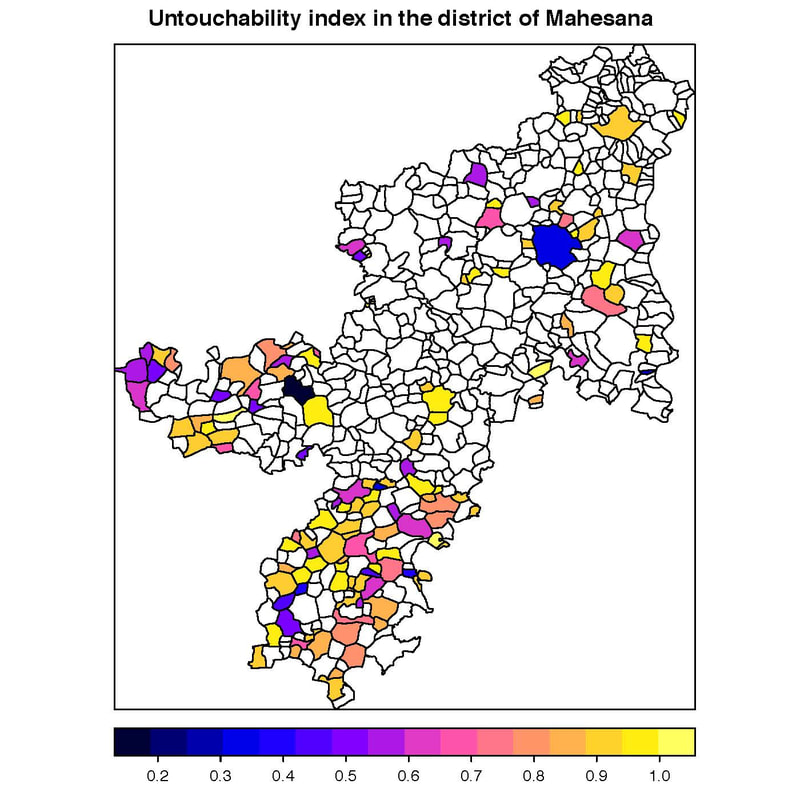
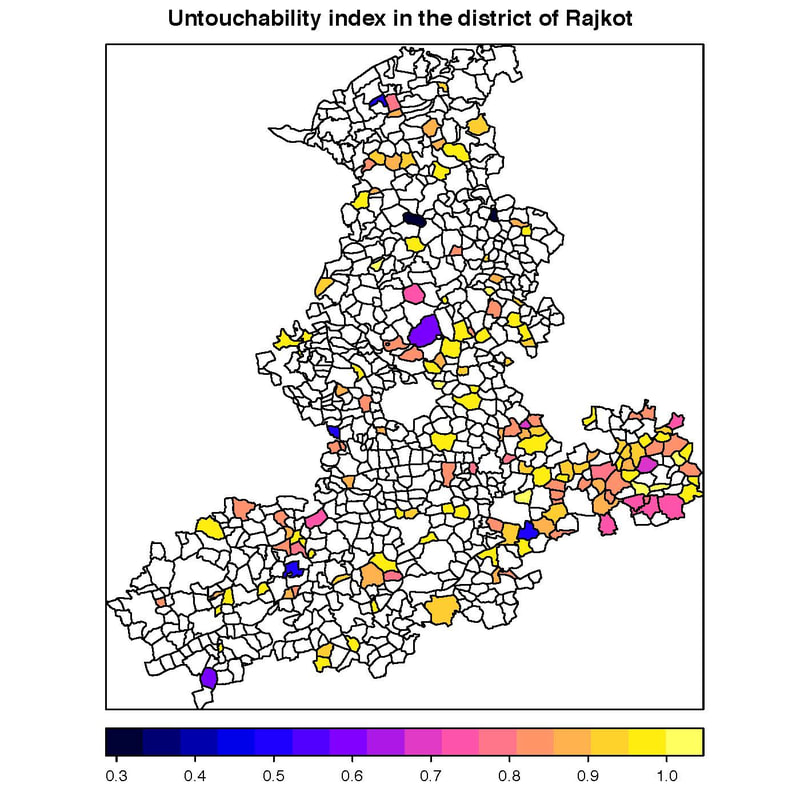
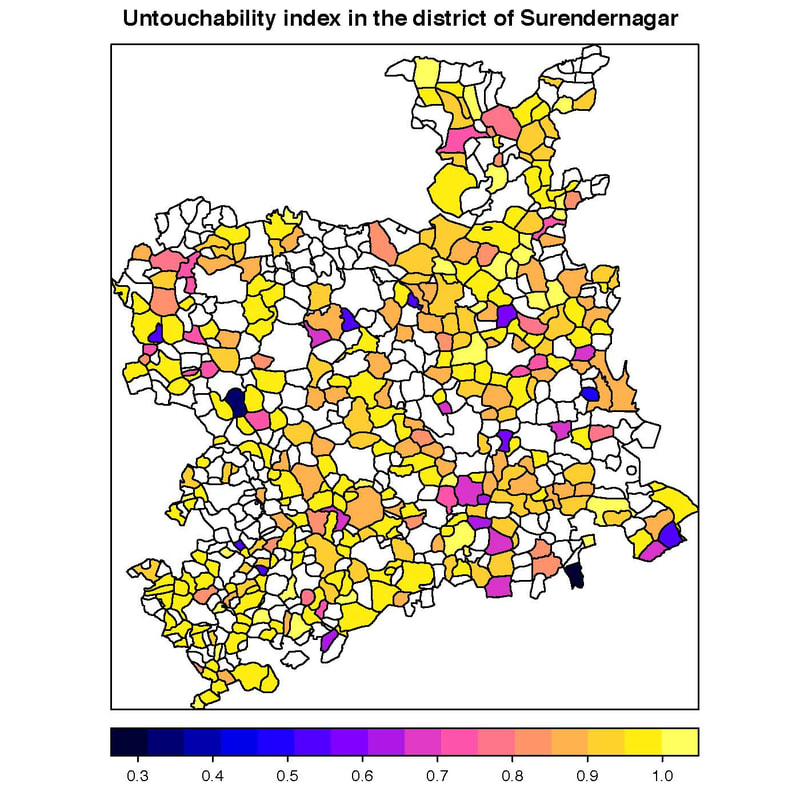
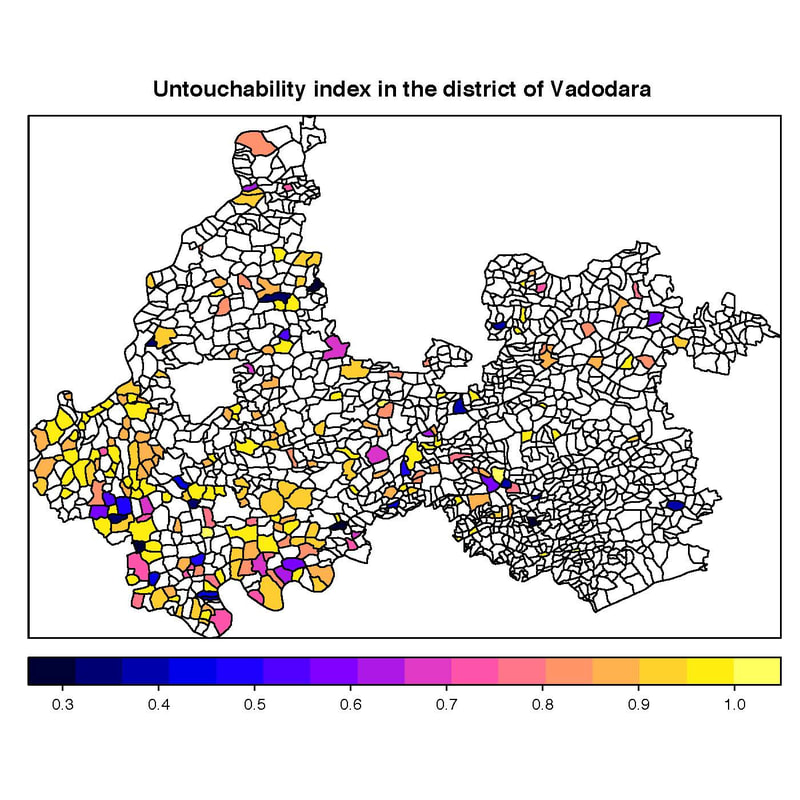
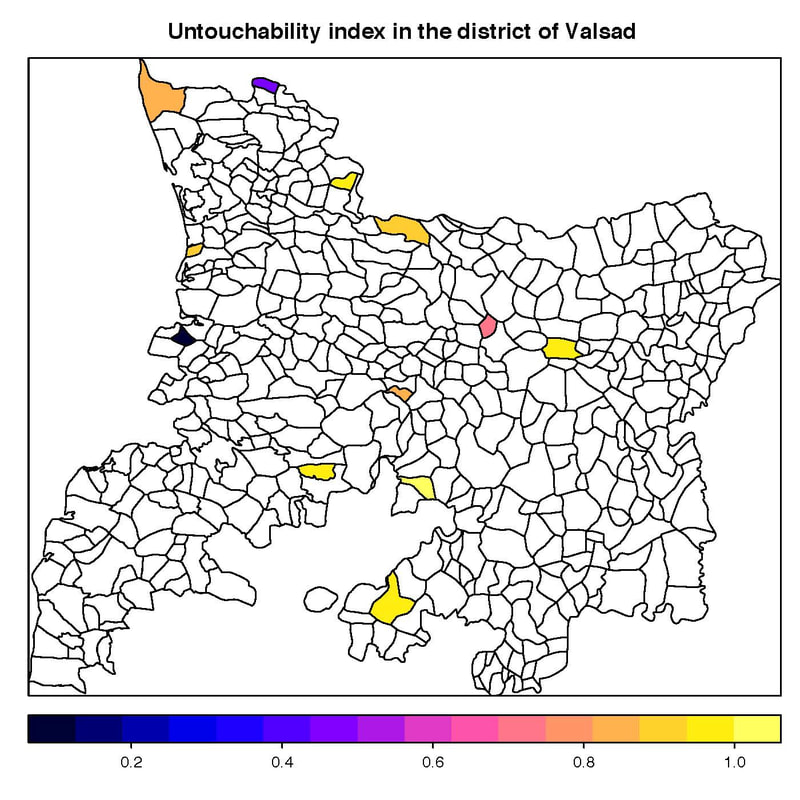
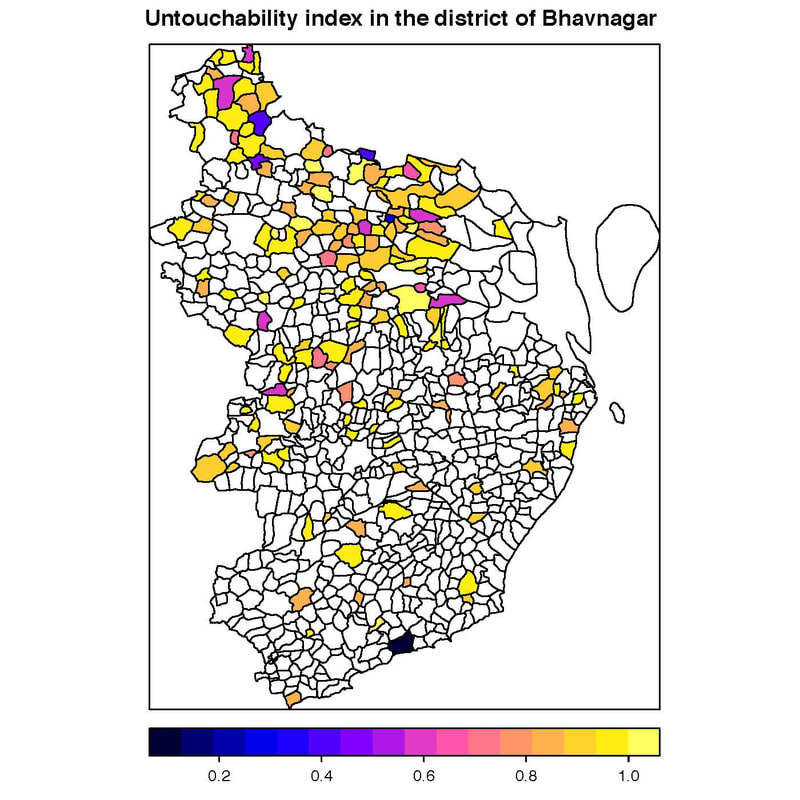
We thought it would be useful to show where our data came from (i.e., which villages provided information) as well as spatially what the data looked like. Yellow means that untouchability is high whereas the dark purple means that untouchability is very low. White means that the location has no information.

Pictures from Launch of Report
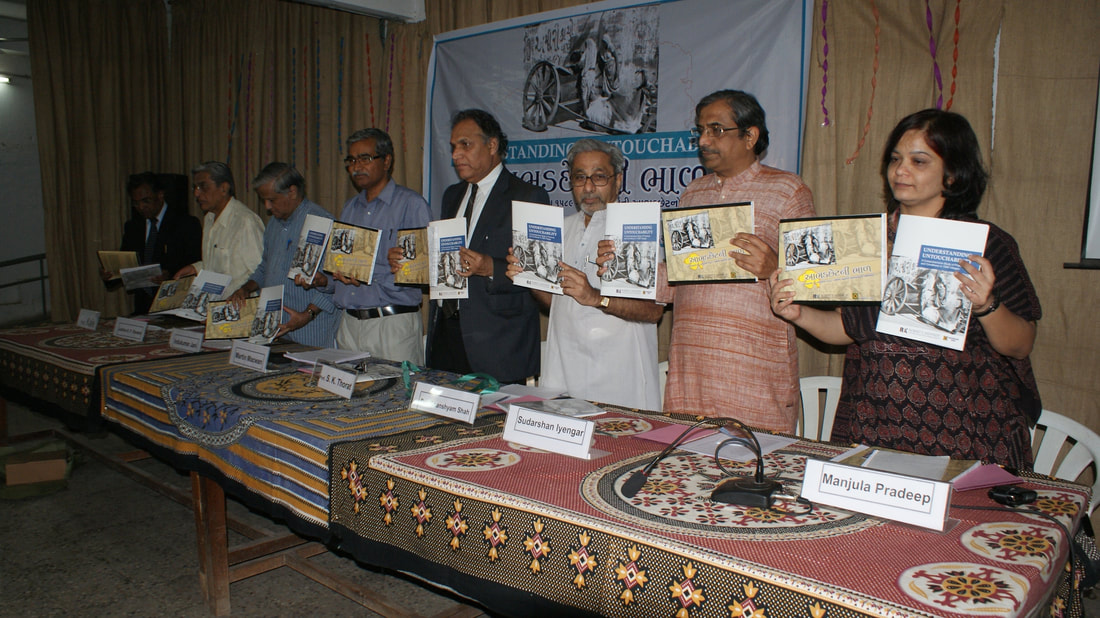
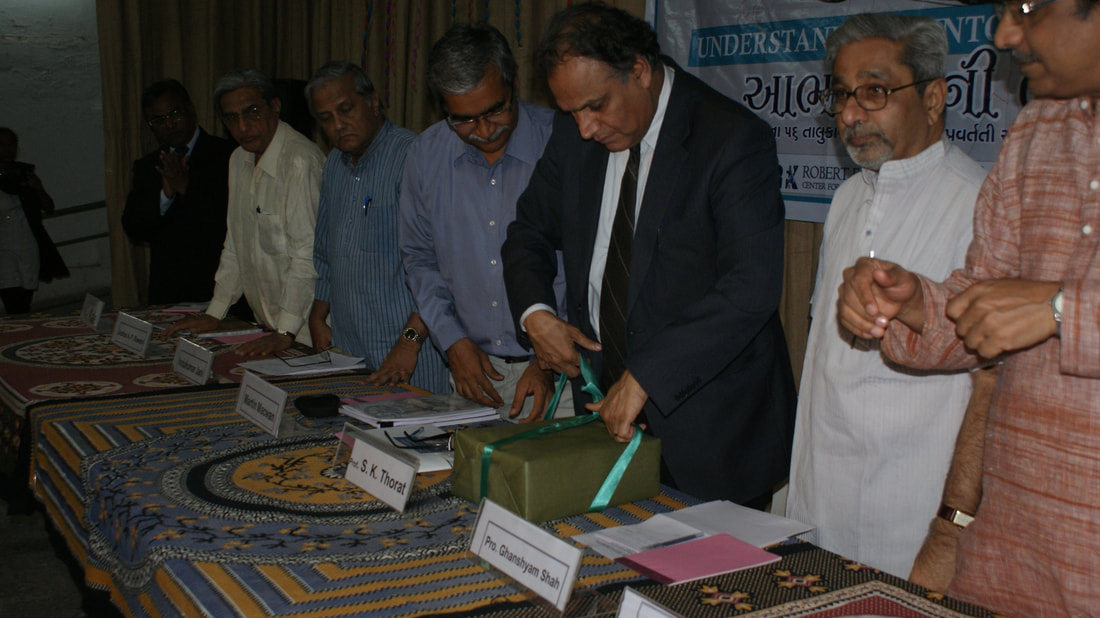
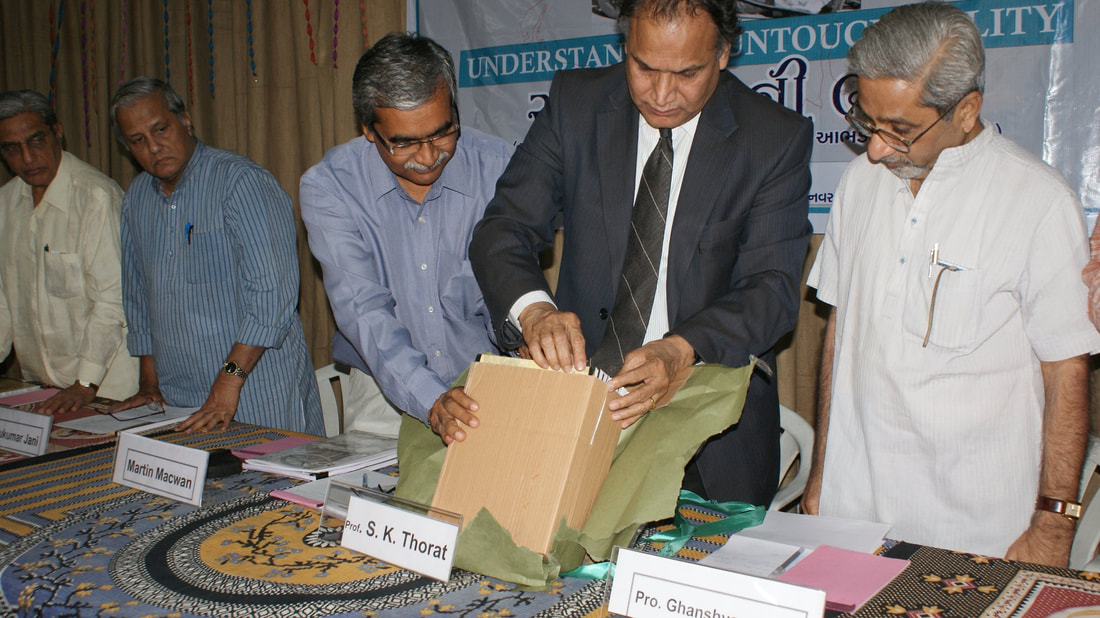
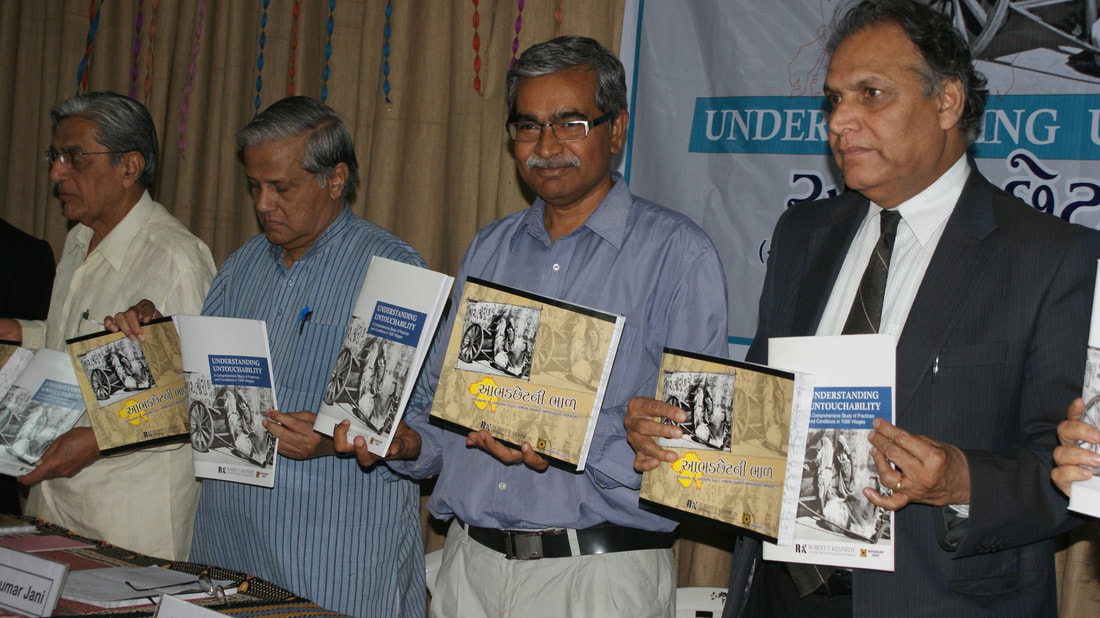
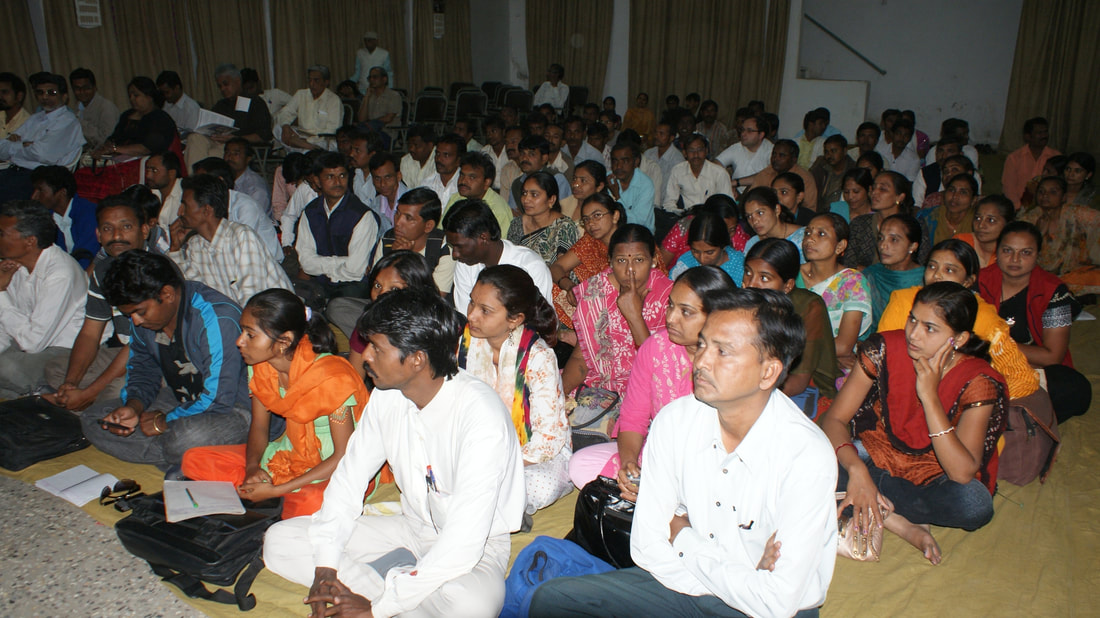
The completion of the report was an important occasion for Navsarjan and the research team. Never before had untouchability been measured at the scale achieved. Accordingly, Navsarjan held a press release for the launch.

Media Coverage of Understanding Untouchability
Gujarati government commissions a study to "review" Understanding Untouchability by CEPT University scholars
The government of Gujarat was not especially pleased about the Understanding Untouchability report and in response they launched an alternative study to gauge how flawed our research effort had been. This set off a wave of comments.
| alternative_study_on_untouchability.pdf |
Media reports of controversy
Scholarly references to Understanding Untouchability - Books
Scholarly references to Understanding Untouchability - Articles
Link to articles
Related:
Christian Davenport and Priyam Trivedi - Activism and awarenessResistance, cognitive activation, and ‘seeing’ untouchability among 98,316 Dalits
Related:
Christian Davenport and Priyam Trivedi - Activism and awarenessResistance, cognitive activation, and ‘seeing’ untouchability among 98,316 Dalits
From Census to Art
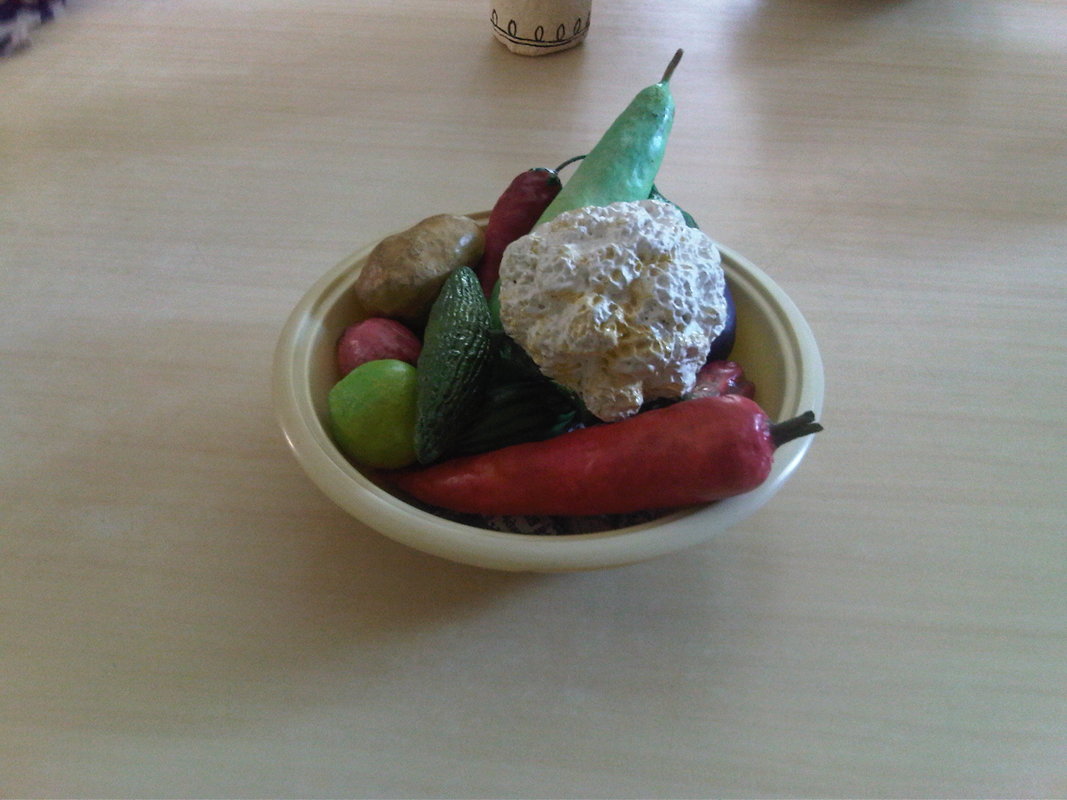
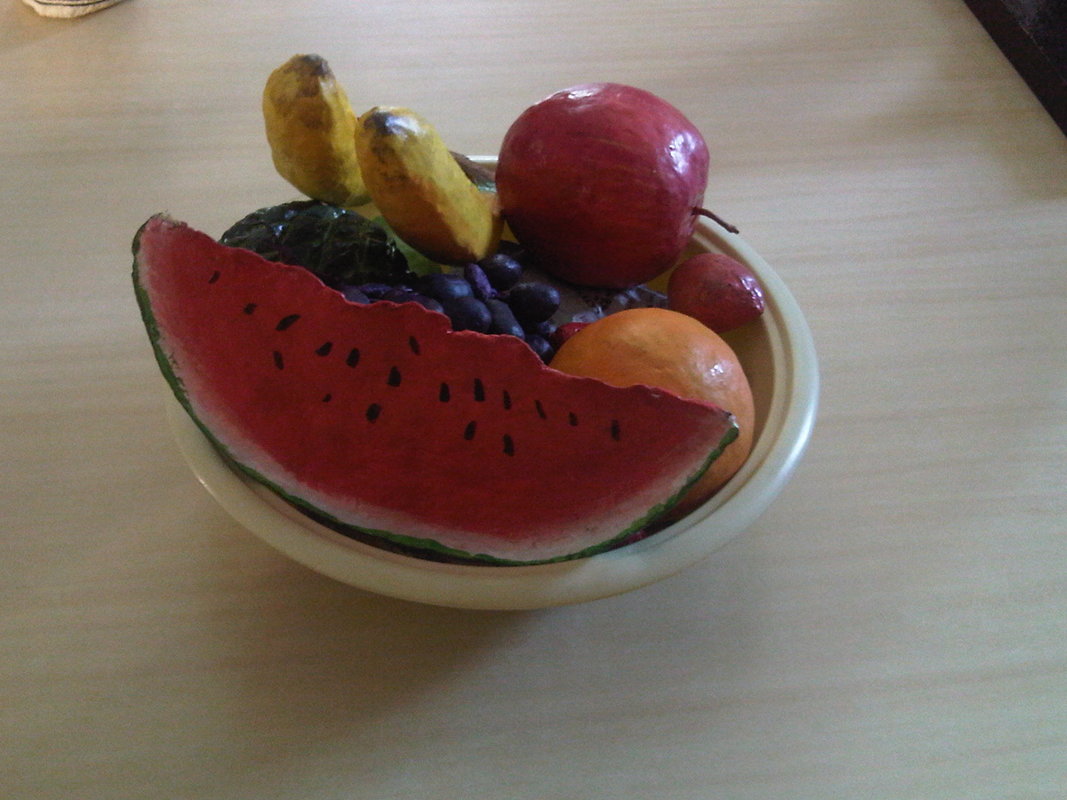
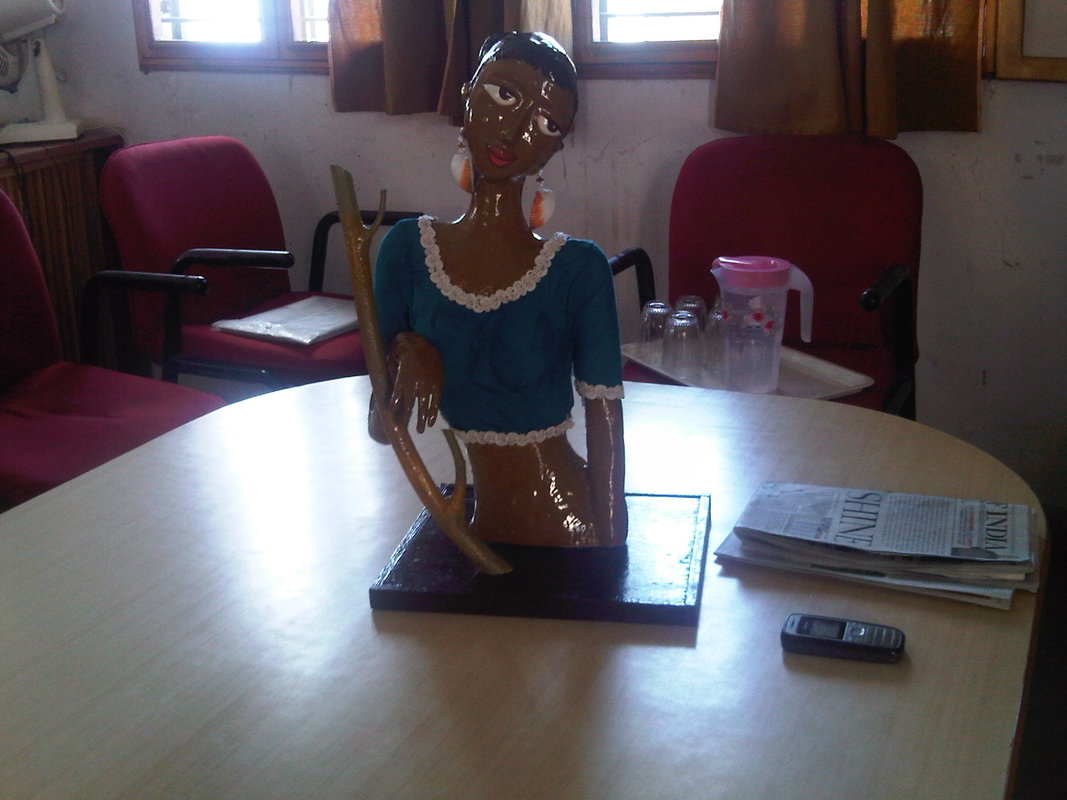
After the completion of the census, Navsarjan was confronted with the issue of what should be done with all the paper that was generated - it was taking up a lot of space. Inevitably, Navsarjan decided to turn the paper into paper mâché and let diverse artists create something from the paper that had been used for the research.
Untouchability Game
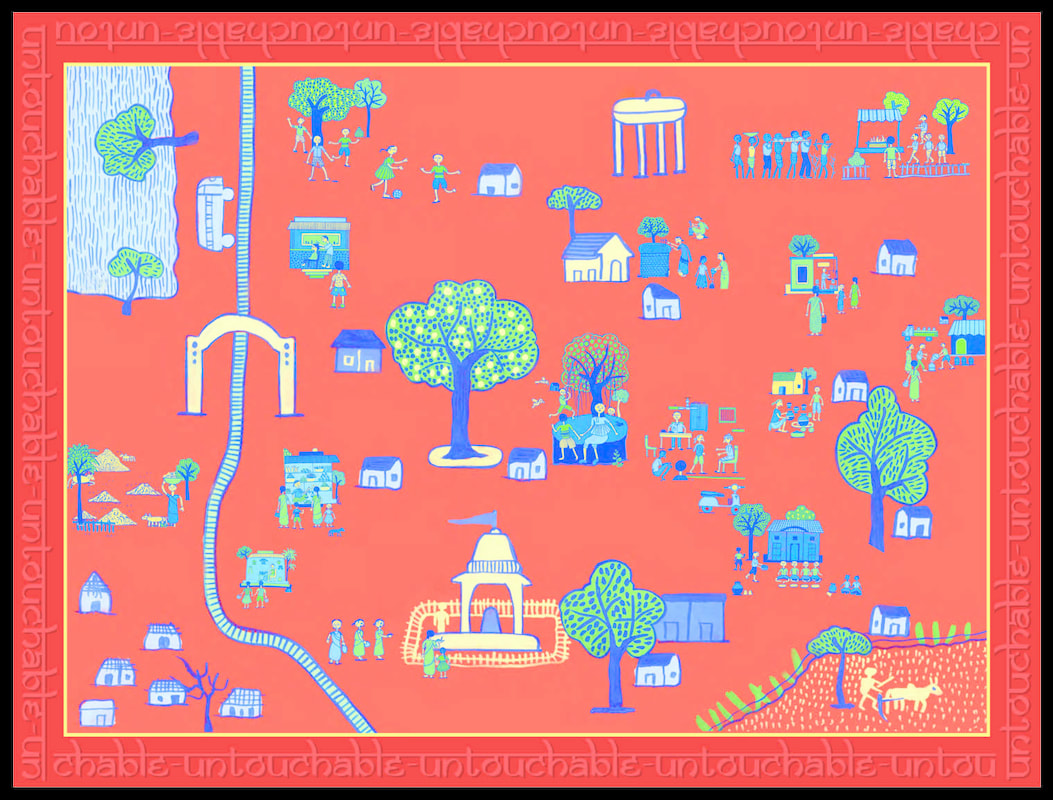
Invariably, I would be asked what untouchability was and how it functioned. Trying in diverse ways to communicate this, I finally decided to create a board game of untouchability to walk through the different practices and what it was like to be a Dalit. We commissioned a local artist to draw the board - what was intended to be the typical village with town square, the water well, main road, isolated Dalit community, the school, the cemetery, farms and so forth. This was then used to create scenarios where untouchability would be played out. The game is still under development with about 30 practices. What I did not appreciate at the time was the variability in practice between different members of the caste system. All these combinations became useful to identify as one tried to work out specifically what would happen in a specific incident. What was largely a function of Who which was also influenced by where and when.
Artistic Visitation
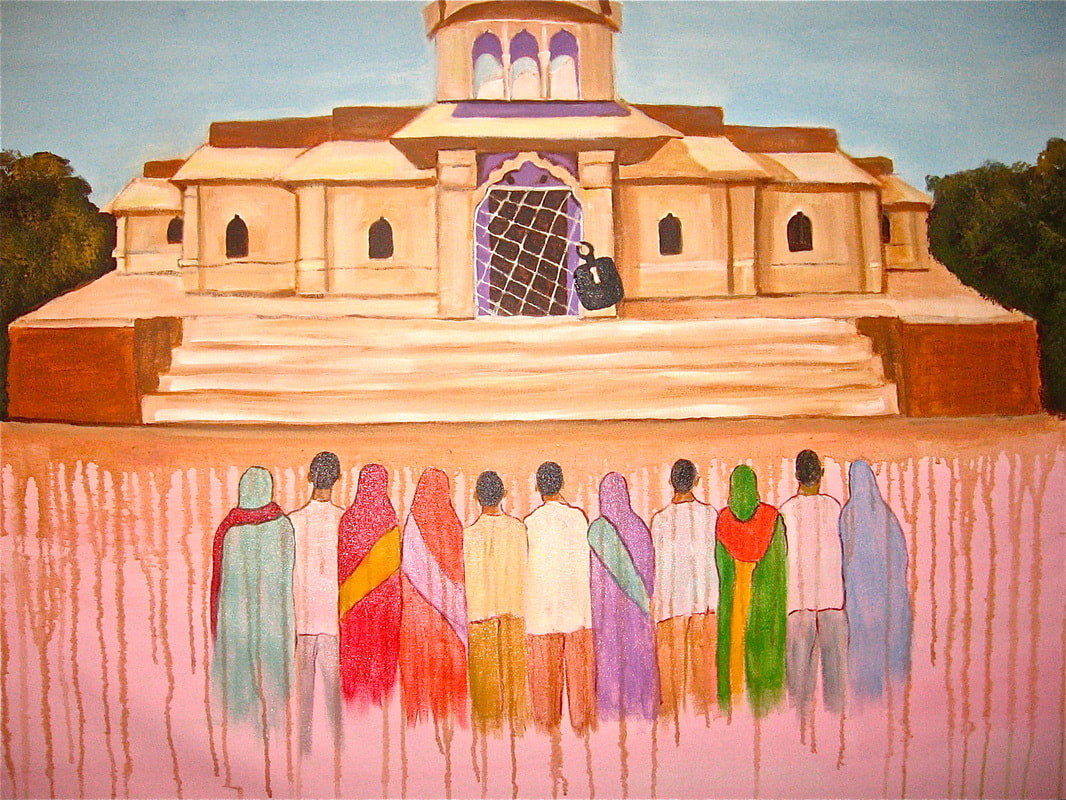
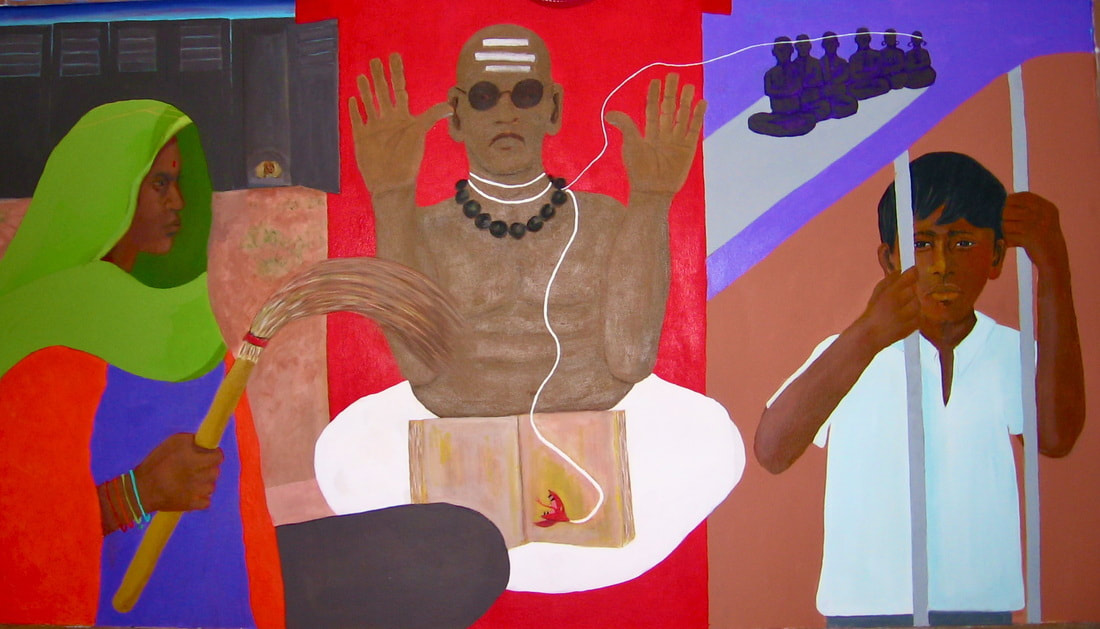
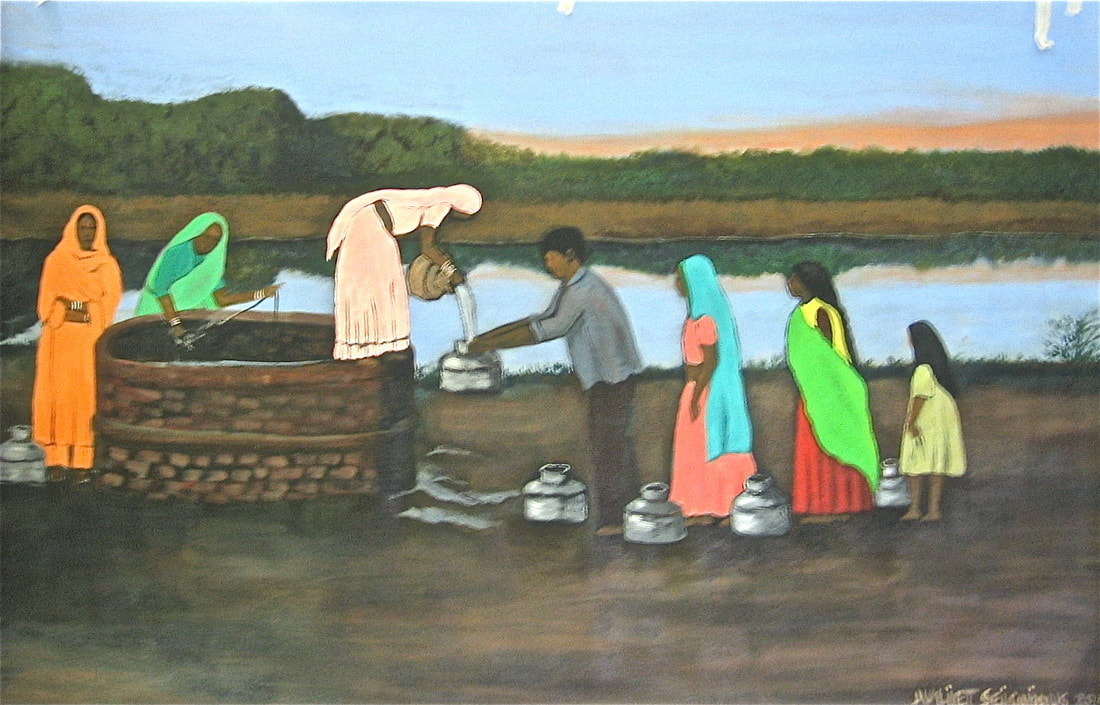
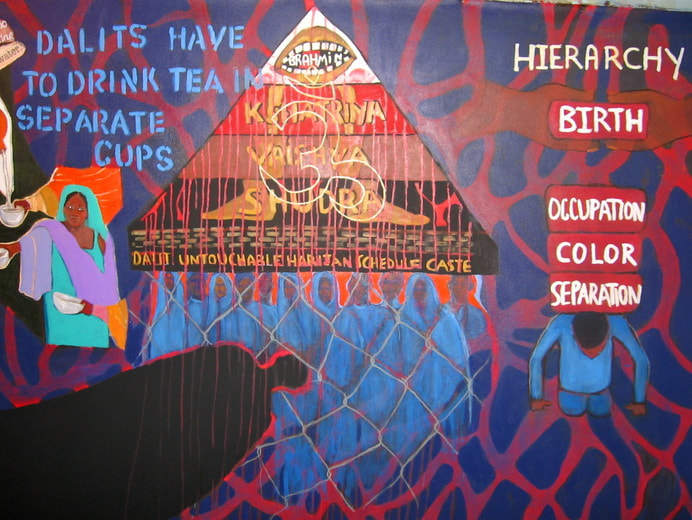
At some point, Martin had met my family and he really hit it off with my mother. Upon seeing her art, he invited her to India in order to paint Dalit history. Always up for a challenge, my mother went on two separate trips of 3 months a piece. While in country she traveled around to the different villages (much like I had years before). She was given dozens of things to read but more importantly she was essentially adopted by the many students there as one of the elders of the community.
Mom created approximately 40 paintings while at the school associated with Navsarjan. Several are displayed below. The full collection as well as a blog can be found here.
Mom created approximately 40 paintings while at the school associated with Navsarjan. Several are displayed below. The full collection as well as a blog can be found here.
Documentary
While working on our study, I would always be introduced to others who were working on different aspects of the relevant topic. On one occasion I was introduced to a film maker: Stalin K. I was told that he was working on an important film about untouchability. This is from the Project webpage:
- This film is perhaps the most comprehensive look at Untouchability ever undertaken on film. Spanning eight states and four religions, this film will make it impossible for anyone to deny that Untouchability continues to be practiced in India. The film introduces leading Benares scholars who interpret Hindu scriptures to mean that Dalits ‘have no right’ to education, and Rajput farmers who proudly proclaim that no Dalit may sit in their presence, and that the police must seek their permission before pursuing cases of atrocities.
Readings
Dr. Ambedkar
- Administration and Finance of the East India Company
- Ancient Indian Commerce
- Castes in India; Their Mechanism, Genesis and Development
- Small Holdings in India and their Remedies
- Mr. Russell and the reconstruction of Society
- The Present Problem in Indian Currency – I
- The Present Problem in Indian Currency – II
- Review: Currency and Exchange by H.L. Chablani
- The Evolution of Provincial Finance in British India: A study in the Provincial Decentralisation of Imperial Finance
- Statement of Evidence to the Royal Commission on Indian Currency
- Statement of Evidence to the Royal Commission on Indian Currency on 15th December 1925
- Review: Report of the Taxation Enquiry Committee, 1926
- Essay on Untouchables and Untouchability: Social
- Essay on Untouchables and Untouchability: Political
- Essay on Untouchables and Untouchability: Religious
- Philosophy Of Hinduism
- India and Pre-requisite of Communism
- Revolution and Counter-Revolution
- Buddha or Karl Marx
- Riddles in Hinduism
- The Untouchables and the Pax Britannica
- Manu and the Shudras
- Lectures on English Constitution
- Paramountcy and the Claim of the Indian States to be Independent
- Notes on Acts and Laws
- Annihilation of Caste
- Federation versus Freedom
- Ranade, Gandhi and Jinnah
- Mr. Gandhi and the Emancipation of the Untouchables
- Communal Deadlock and a Way to Solve it
- What Congress and Gandhi have done to the Untouchables
- Who were the Shudras ?
- Foreword: Commodity Exchange by P.G. Salve
- The Problem of Rupee: Its Origin and its Solution
- History of Indian Currency and Banking
- States and Minorities: What are their Rights and How to secure them in the Constitution of Free India
- Foreword: Social Insurance and India by M.R. Idgunji
- The Untouchables: Who were they and why they became Untouchables?
- Maharashtra as a Linguistic Province (Statement submitted to the Linguistic Provinces Commission)
- Pakistan or the Partition of India
- Note on the Annexure (Chapter IX: A plea to the foreigner- Additional Chapter in Second Edition of what Congress and Gandhi….)
- Commercial Relations of India in the Middle Ages or the rise of Islam and the Expansion of Western Europe
- India on the Eve of the Crown Government
- Waiting for a Visa: Autobiographical notes
- The Constitution of British India
- Notes on Parliamentary Procedure
- Notes on History of India